


11 February 2026
Modeling Carbon Fluxes in Living Cork Oak Biomass
Measuring Carbon in Tree Biomass Throughout 2025, the company IDAF has advanced the development of models designed to assess the impact of forest management activities on the carbon sequestration capacity of above-ground biomass in cork oak forests. This work runs parallel to the soil carbon assessment currently being conducted by the University of Cordoba. To…
Measuring Carbon in Tree Biomass
Throughout 2025, the company IDAF has advanced the development of models designed to assess the impact of forest management activities on the carbon sequestration capacity of above-ground biomass in cork oak forests. This work runs parallel to the soil carbon assessment currently being conducted by the University of Cordoba.
To this end, an efficient and traceable carbon flux accounting method has been defined—aligned with international methodologies—to ensure that its integration into official accounting systems is both feasible and consistent with existing standards.
Study and Measurement Plots
The pilot plots used to quantify the impact of silviculture on carbon sequestration were selected based on several factors: the variability in the species’ physiological, climatic, and edaphic potential within the intervention area; the diversity of cork oak forest types; and the historical application of the silvicultural regimes under study. The plot locations ensure that the results are representative of the cork oak’s overall distribution across Andalusia and the Alentejo region. Plot identification was carried out in collaboration with CSMA – Regional Ministry of Sustainability and Environment of Andalusia, AMAYA -Environment Agency of Andalusia, and UNAC.
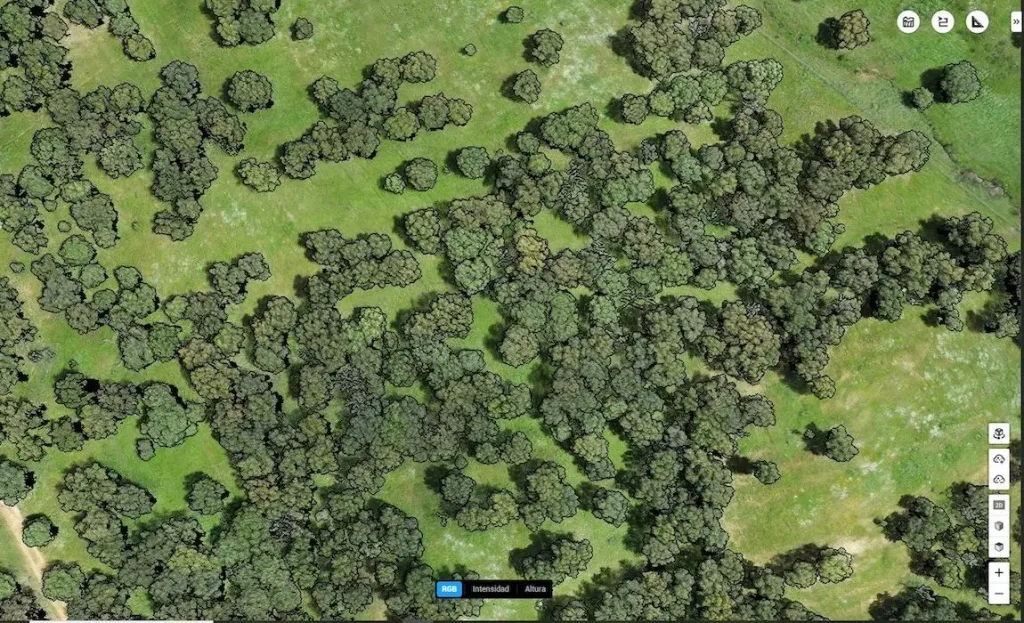
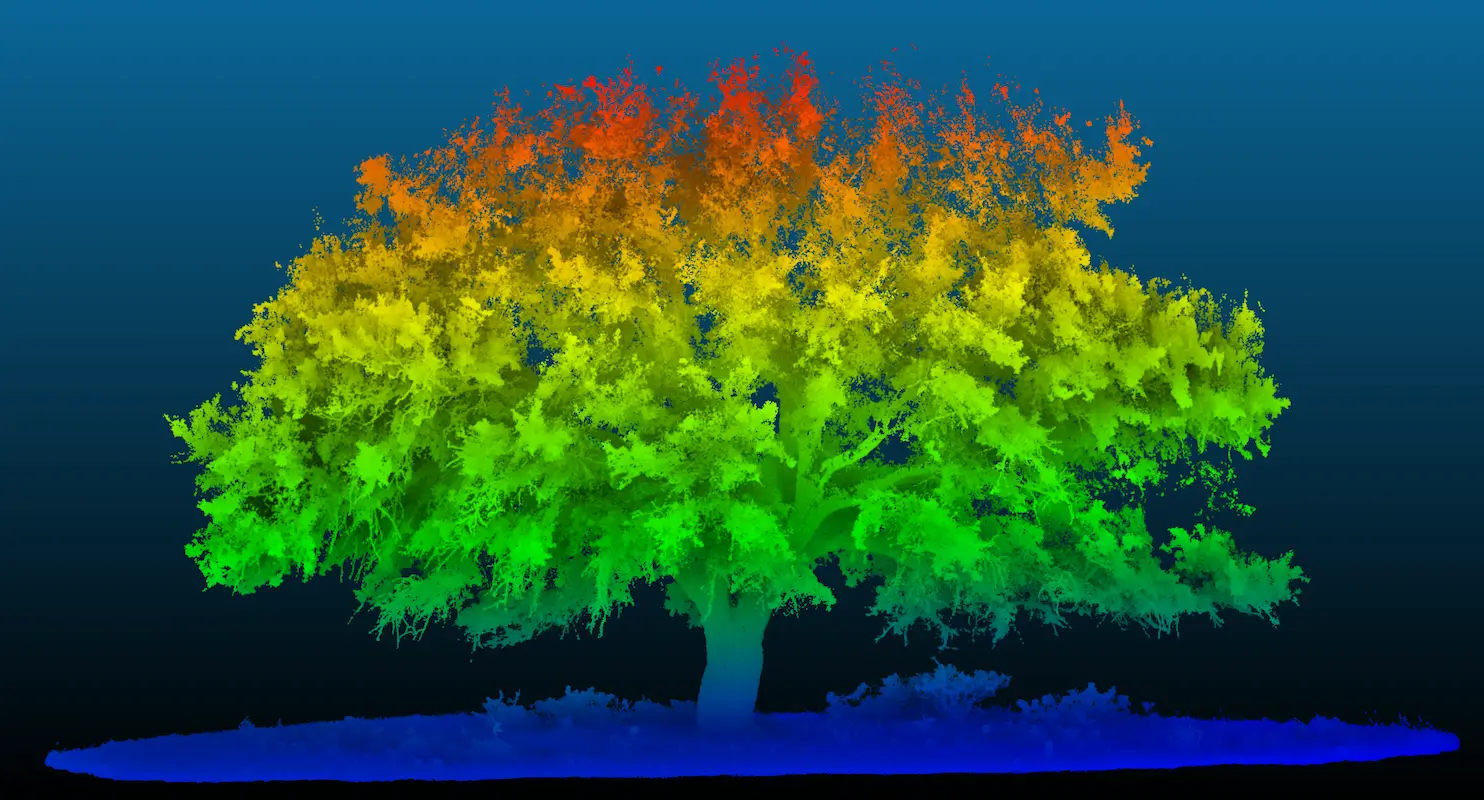
To ensure accurate quantification without resorting to destructive sampling methods, terrestrial close-range remote sensing techniques were employed, facilitating a continuous and efficient assessment of vegetation structure. In this context, forest biomass was evaluated using Terrestrial Laser Scanning (TLS) and airborne LiDAR mounted on unmanned aerial vehicles (UAVs).
These technologies enable the creation of a precise 3D representation of the forest, allowing for the structural measurements needed to volumetrically estimate existing biomass.
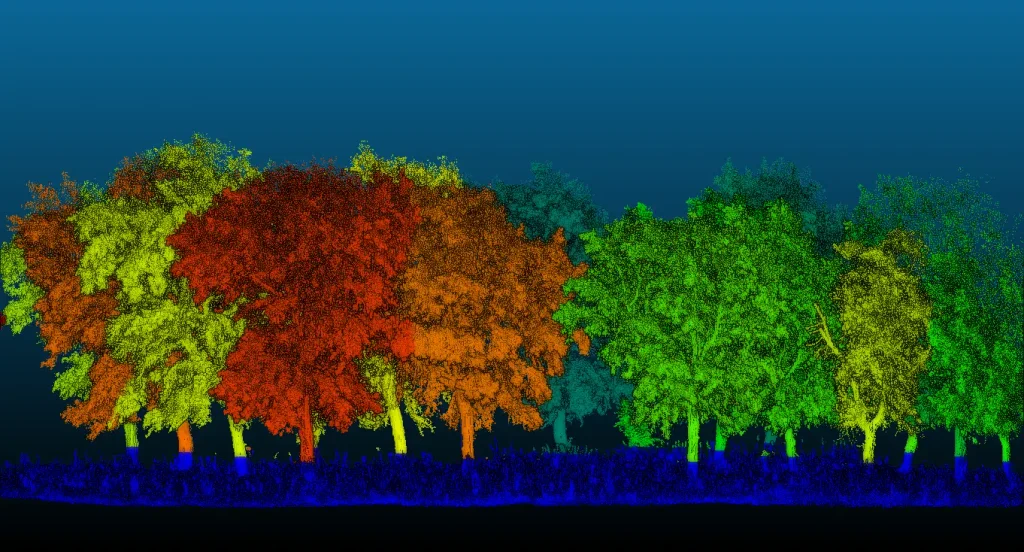
TLS allows for the measurement of the forest’s vertical and horizontal structure across areas of approximately 0.5 hectares. UAV data allows for the extrapolation of TLS assessments—conducted at the individual tree level—to larger areas of up to 30 hectares using ITC models. This methodology aims to quantify carbon sequestration while accounting for the high spatial heterogeneity of cork oak woodlands.
This information has served as the basis for estimating the carbon stored in the woodland’s tree and shrub layers.
In 2026, the data obtained are being used to compare conventional forest management with silvicultural practices specifically designed to maximize carbon sequestration. This comparison will enable the quantification of additional carbon generated by these practices and the assessment of their potential for conversion into carbon credits, in accordance with established additionality principles. Furthermore, it will lay the groundwork for integrating these findings into management and decision-support tools for carbon-oriented silviculture.
The development of this methodology represents a significant advancement, providing a rapid, cost-effective, and technically robust system for quantifying carbon in living biomass.