



30 October 2025
CO2RK at the “Together for Nature” International Conference in Riga
The LIFE Strategic Project LatviaNature hosted the "Together for Nature" International Conference in Riga, Latvia in September 2025
CO2RK participated in the “Together for Nature: Merging Public and Private Efforts” International Conference held in Riga, Latvia, in September 2025. At this international meeting, the Andalusian Regional Government’s Ministry of Sustainability and Environment and YUNTAS, as partners responsible for forging international links within CO2RK, were able to share ideas and objectives with experts from the public and private sectors in the field of nature conservation, politicians and officials from the European Commission, as well as environmental NGOs and representatives from other LIFE projects.

CO2RK as a reference for the EC
During the event, it was possible to exchange views with Andrea Vettori, head of the Biodiversity Unit of the European Commission, on the technical, administrative, legal and operational architecture that CO2RK is developing for carbon credits in slow-growing forests throughout the EU.
For the European Commission, developing mechanisms to attract private investment for improved ecosystem management is an absolute priority. These mechanisms aim to reward landowners who sustainably manage high-value forest land, whether or not it is part of the Natura 2000 network, and who maintain management systems that benefit the environment and climate change mitigation. LIFE CO2RK is currently a benchmark for the entire EU.
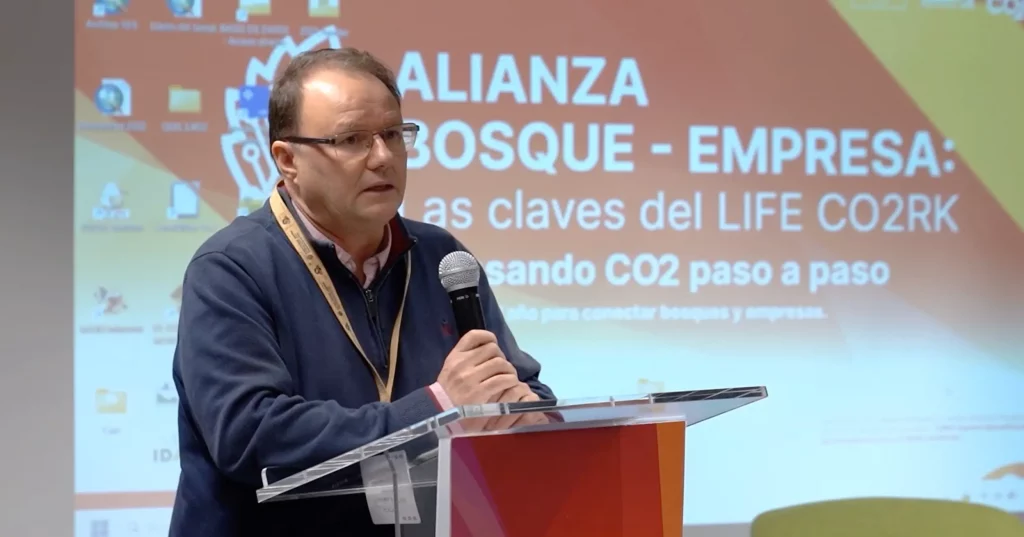
LIFE CO2RK Presentation

The objective of this International Conference is to explore financing options for environmental policies. CO2RK gave a presentation in one of the three thematic sessions, focusing on “Incentivizing private landowners through financing programs.” In their presentation, CO2RK members outlined the key aspects of the project, emphasizing its distinctive and innovative factors, such as the calculation methodologies for measuring carbon flows in high-mountain cork oak and beech forest ecosystems, and determining the impact of natural factors and specific forest management practices on the CO2 sequestration capacity of the soil and plant biomass.
These methodologies are beginning to provide figures and estimates that suggest participation in compensation projects will be profitable for landowners, as the monetary value of the absorption (€/Ton CO2eq) will allow them to finance forest management measures that will maximize CO2 sequestration, improve the profitability of cork or sustainable timber harvesting, and ensure the necessary generational renewal in these forests.
Emphasis was placed on the next phase that CO2RK will develop in parallel with the scientific and technical work, which consists of engaging forest owners and potential investors. This is a key phase for the success of the compensation system, in which both parties, despite the project still being under development, have shown great interest, value the project’s progress, and express their hope that the system will be fully operational within the agreed timeframe.
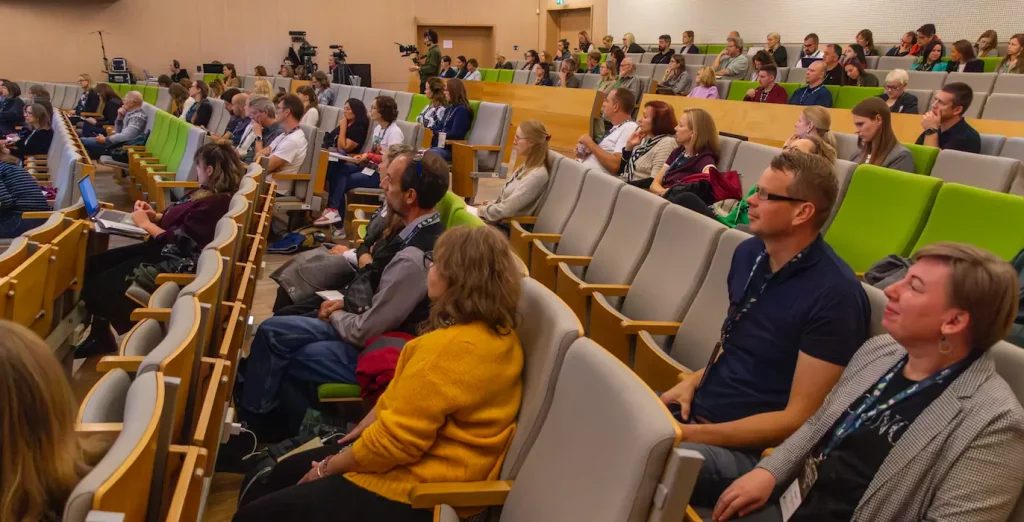
A lengthy debate ensued, with attendees insisting on understanding some key aspects of CO2RK’s proposed formula, primarily:
How to transition from subsidy-based financing to private financing?
CO2RK explained to the attendees that the aim is to reconcile both by separating the final destination of each funding source. Attracting private funds is only possible with legal backing, which in Andalusia is provided by the Andalusian Climate Change Law.
For CO2RK, CO2 sequestration is not a substitute for the sustainable exploitation already underway, but rather an incentive for its recovery in areas degraded by overhunting, pests, climate change, or simply by the abandonment of forest management.
What role will Nature Credits play?
The publication on July 7th of the communication “Roadmap towards Nature Credits” by the European Commission has impacted the environmental and forestry sectors throughout the EU, although many uncertainties remain.
CO2RK’s impression following discussions in Riga with representatives of the European Commission is that the legal, technical, and operational framework developed by CO2RK can also serve as a model for Nature Credits. This is highlighted in the following video by Lynn Barrett, the session moderator, who points out that only 1 out of 50 participants is making progress in raising private funds for ecosystem management, thus showing the way forward.
Is there sufficient potential in private funding?
Lynn Barrat, the moderator, presented some figures: the European Commission estimates that the EU allocates €48 billion/year to biodiversity management and recovery (mainly within the Natura 2000 network), but €65 billion/year would be needed to incorporate Nature Restoration.
The private sector could contribute these additional €19 billion in its own interest, and as an example, she cited the tens of billions of dollars in stock market value that Tesla has suffered since 2025 due to a reputational problem. To improve this reputation, the private sector has an opportunity in financing projects like LIFE CO2RK or the Nature Restoration Act.
The problem of credibility: What role does certification play?
Several attendees gave examples of large investors wanting to invest, or even investing directly, in the improvement of certain ecosystems (Nestlé, for example, is investing in tropical and subtropical areas to strengthen its infant food business because improving environmental indicators guarantees its supply of high-quality raw materials, free from any risk of contamination).
The problem may lie in certification: Investors demand robust, transparent, and credible systems… but technicians and managers must ensure that these systems are not excessively costly for the landowner who has to carry out the work on their land.
How can we recognize sustainable management practices that have been in place for generations?
Current systems reward additionality, so the more degraded the habitat being treated, the greater its capacity to attract funding. It is explained that this is one of CO2RK’s concerns, and that the project is developing metrics that value additionality not only relative to the “baseline” measured in the field, but also relative to the established legal minimums, so that landowners who have already exceeded these thresholds for decades see their efforts recognized.
The minimum area for a compensation action has also been reduced to a minimum, allowing Carbon Forestry to be applied even to 1 hectare affected by a pest, or left as a clearing in the forest after a fire 50 years ago, or simply requiring support for natural regeneration due to old age, such as planting or fencing to protect against deer.
Conclusions
Private funding for nature restoration projects is the future, but it is still in the early stages of formulation and development. CO2RK is at the forefront in the EU, that is to say: in a rather solitary, innovative position, venturing into uncharted territory, and therefore subject to progress through a trial-and-error approach that requires the involvement of stakeholders to successfully design an ambitious technical, administrative, legal, and operational framework that is attractive to all parties.